
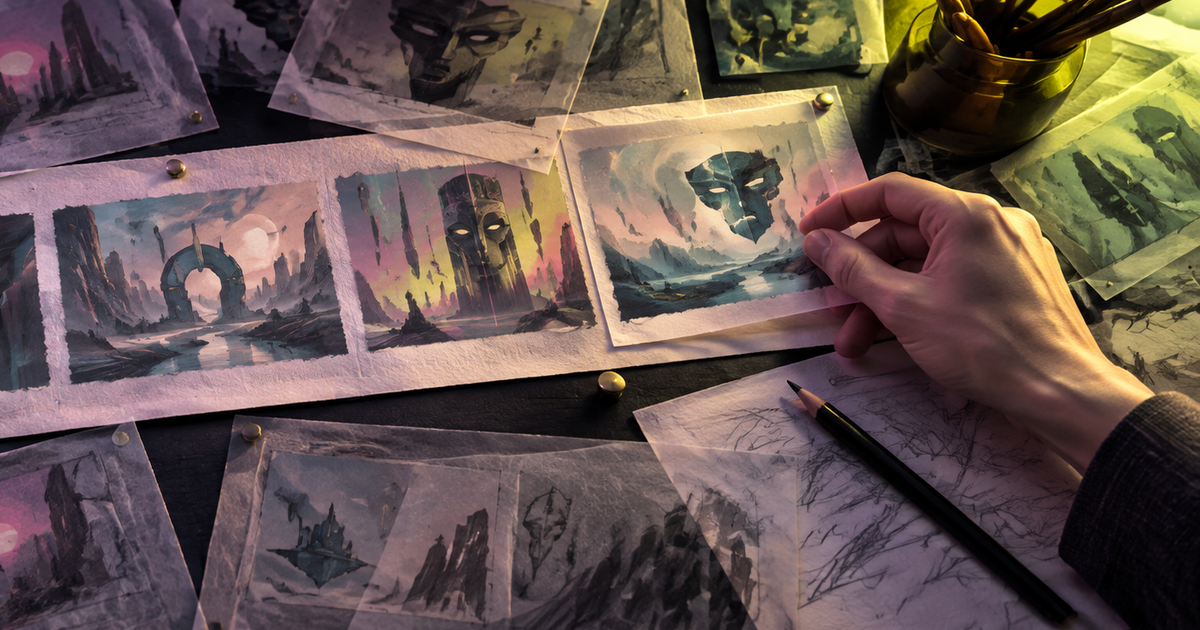
Sanxingdui's producers describe people writing, directing, designing and selecting material made with generative tools. Their account separates creative decisions from generated images. It explains what they say the team did; it cannot establish whether the finished film delivers convincing images or an engaging story. [1]
The decisions behind the production label
In an October 21 Global Times interview, producer Jiang Defu described specialized roles covering screenwriting, directing, production, art design, cinematography, lighting, sound and editing. That is a much more specific account than the phrase fully AI-generated. A viewer can distinguish who sets the narrative and visual requirements from the system used to produce images that meet them. The production label alone leaves those responsibilities unclear. [1]
Writing establishes what happens and why a character acts. Art direction establishes the appearance the team wants. Editing determines which material appears, its order and its duration. Generating images does not answer those questions by itself. The producers' account places human choices around generation, including choices about what to reject. These are descriptions of their intended process, without an independent examination of the production files. [1]
The distinction helps interpret both promotional claims and criticism. A generated frame can involve substantial selection without being visually persuasive. A demanding production process can still produce an unsatisfying film. Neither the presence of human workers nor the use of generative tools supplies a verdict on the result. The interview describes responsibilities; the quality question requires evidence about the finished work. [1][2]
Selection is a creative decision
Jiang said images that looked acceptable on a phone did not necessarily withstand a cinema screen. He described repeated screening, revision and selection, with different reviewer groups examining frames for problems. The useful detail is the change in viewing conditions: an image intended for theatrical projection must be evaluated at that scale. A phone preview cannot settle how the same image will read in a cinema. [1]
Consider the decision sequence his description implies. A generated version is inspected, a problem is identified, revisions are requested and a version is selected for the edit. The image is the generated output. The requirement, rejection and selection are human decisions. This explanation does not reconstruct a particular shot or claim access to rejected frames. It identifies the separate kinds of work in Jiang's account. [1]
That distinction also prevents revision effort from becoming a quality score. The interview gives the producers' description of review, rather than review notes or an independent comparison of versions. Their stated aim was to make images reflect their intentions. Whether the selected material achieves that aim remains a separate question for someone assessing the film. [1]
Research and invention remain separate
Producer Qu Jixiaojiang said the team consulted Sanxingdui experts to distinguish established archaeological evidence, unresolved academic questions and cinematic imagination. She described using symbols on bronzes to connect an ancient civilization with a fictional future. Those categories matter even when images are generated: a visually convincing reconstruction can still include speculation or invention. The filmmaking method cannot make the imagined material archaeological evidence. [1]
For a prospective viewer, this is a more useful distinction than assuming every ancient-looking image has the same factual basis. Ask which elements the filmmakers identify as researched and which they describe as fictional. The interview supplies their stated distinction, without a scene-by-scene account of what the experts advised or how those recommendations entered the finished film. [1]
What the label leaves unanswered
AFP's October 23 report, carried by CNA, quotes preview attendee Iris Yang saying she would not have paid given the film's quality. That is one named attendee's response. The same report quotes independent AI director Zhang Jun saying audiences will not automatically buy tickets because a film is AI-generated. These comments identify a viewer's practical question: what makes the completed work worth their time and money? [2]
Cartoon Brew's October 26 comparison with Niu Lai explicitly cautions that the two films' performances establish no universal rule about audience attitudes to AI. A production label, early commercial reporting and an individual response answer different questions. Use the process account to understand the human decisions being claimed, then look for specific assessments of the film's storytelling and images before making a quality judgment. [1][2][3]
Sources
- China’s first fully AI-generated feature film to hit cinemas on FridayGlobal Times, Chen Xi,
- China's first AI film hits cinemas but ticket sales lagCNA / AFP,
- China’s First AI Feature Flops, Months After Scrappy ‘Niu Lai’ Became A Box Office HitCartoon Brew, Jamie Lang,