
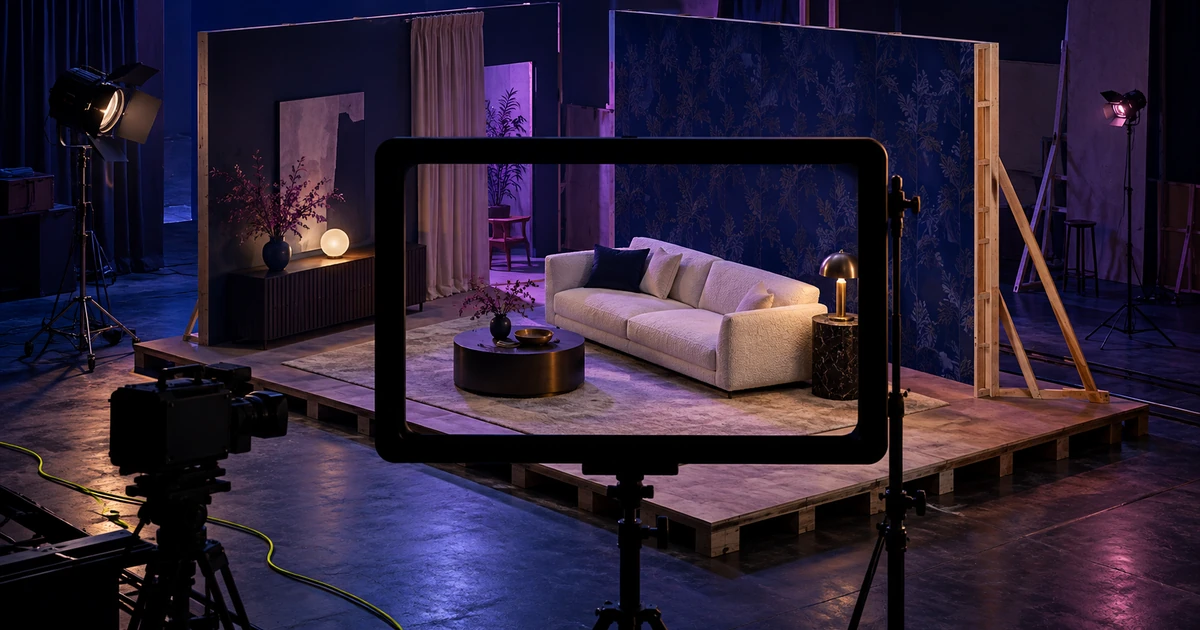
Primetime's houses were arranged to serve the television crew's cameras. Production designer Alex DiGerlando says that furniture placement could make little sense for everyday living. A second bar, for example, occupied a space where a sofa should have been. The arrangement was part of the film's design [1].
Real houses, modified for the film
In his October 5 interview with The Credits, DiGerlando describes searching for houses with the right late-1990s appearance. Location manager Tyler Hohmann helped the team find three houses. Some already had suitable period appliances. The art department added wallpaper, changed or moved furniture, and modified some kitchens [1].
Those details explain how an existing home becomes a set. The team could keep useful features, then change the room to meet the scene's needs. DiGerlando describes a design process built around found locations. His account does not provide a measured plan of any house [1].
Furniture serves the camera frame
DiGerlando connects the unusual furniture placement to the needs of the television production shown in the film. The crew did not want to aim a camera at a wall. Moving furniture gave them a workable background and space for the confrontation. His second-bar example shows how that purpose could conflict with ordinary use of the room [1].
The art department also recreated the show's small control room, using period monitors, cameras and equipment. Chere Theriot oversaw set decoration. Together, the domestic furniture and television equipment establish a house being used for an organized production [1].
The reference behind the artificial setting
DiGerlando says he, director Lance Oppenheim and cinematographer David Bolen referred to Larry Sultan's photo series The Valley. What interested them was the combination of real houses and obviously arranged situations. This is the production designer's stated reference for the film's visual approach [1].
A useful question to keep in mind is how a room's purpose affects its furniture. Compare the needs of a home with the needs of the crew using it. This is a suggested way to study the choices described in the interview; it makes no claim about how you will respond to a particular scene [1].
What this account can establish
The interview supports an explanation of the makers' choices: period locations, modified rooms, camera-oriented furniture and a recreated control room. It does not establish that every detail in Primetime reproduces a real event exactly. Treat the design account as testimony about making a dramatic film [1].
This guide stays with those production choices and leaves plot outcomes out. It gives no judgment on the film's quality and confirms no Canadian screening or streaming option. The source's general theatrical statement does not identify a session in your area [1].
Sources
- Reality, Rearranged: Primetime Production Designer Alex DiGerlando on the Design of Robert Pattinson's Chris HansenMotion Picture Association / The Credits, interview by Daron James,